
___________________________________________
I had occasion to cast my thoughts back to my first degree in Chemistry this week while commenting on Behind the White Coat, and I realized there were some amusing, if not frightening things that happened there – when you give teenage boys access to large, fully stocked Chemistry Labs.
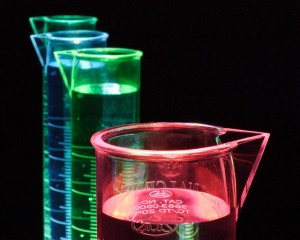
Most people consider the chemical compounds, both in living things (organic) and in non-living things (inorganic) as being known or at least knowable. This couldn’t be further from the truth.
In fact even though there are 100’s of thousands of recorded compounds, still a simple reaction in an undergrad lab can make a compound that has never been seen before on the face of the Earth. We did that one day with careful planning that laid out the reaction, expected yields and other chemical stuff. The thing is that until you make a new compound there is no way to know what its properties will be like (it is assumed that it will be similar to the major inputs – which it often isn’t).
So this fateful day we produced a brand new compound and did it in the fume hood that exhausted all the gases to be removed. Just as we were part-way through, power went down causing all the exhaust fans in all the fume hoods in the whole complex to slowly whirl to a stop. In very short order we realized that our brand new, created compound was a very strong lachrymator – a fancy word that means it burns the eyes and makes tears flow while causing respiratory distress. Because the reaction was still ongoing and we couldn’t stop it (random attempts to stop any reaction without careful planning could result in an explosion or fire or other even more serious outcome.)
And so it came to be that the gas followed all the exhaust lines through the building and came out on every floor, spreading amazingly fast. It was necessary to evacuate the whole building for the rest of the day – and it being a Friday, for what then turned into a long weekend. We were quite proud of what we had accomplished while trying very hard to remain appropriately contrite when questioned about the stream of tearful and gasping students and staff pouring from the building. Ha! If you want to make God laugh, tell Him your plans.
Laboratory classes are complex beasts. It is necessary for the students to have hands-on experience for learning purposes and yet it is not possible for a professor to watch 30 students who are all working with potentially dangerous chemicals and equipment. To that end, they hire students who have already completed that class as monitors or lab assistants. Generally one monitor will have about 6 students they are required to keep safe. That said, there is still the need for each student to be careful and understand what they are doing.
Every year after my first, I worked part-time as a lab monitor. In my third year, I was assigned to a second-year physical chemistry lab class as a monitor. We had some students who were smart but had no common sense at all.
One day, when I was off, the class was doing an experiment with a device called a “Bomb Calorimeter” – its very name suggesting caution was in order. The gist of the experiment was to mix two carefully weighed, dry chemicals in a heavy brass sealed container with a fuse inserted. The whole shebang was lowered into a large insulated plastic container that contained gallons of water. The temperature and volume of water was measured carefully to determine the amount of ambient energy. Then the fuse was activated (electrical) setting off a small explosion inside the inner container. The subsequent rise in temperature indicated the amount of energy released.
On this day, two students loaded the bomb calorimeter and had the top on before the monitor could check it. They had neglected the “measure” part and had filled the explosion chamber full to the top. When they triggered it, the equipment disintegrated like a hand grenade, the resulting explosion throwing pieces of metal and plastic as well as gallons of water all over the lab. The sharp metal remains impaled the ceiling, peppered the walls, broke a window and damaged a lot of other equipment sitting close by. Other than getting wet, not one student was touched.
And so once again God proves that He takes special care of small children, drunks and fools.
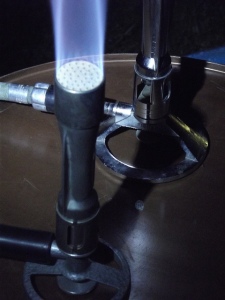 Awareness and tidiness are both critical in the lab. I had a messy pair of students who were doing an experiment one day that required the use of a Bunsen burner. They were using ethanol (denatured – meaning undrinkable) as a solvent in an experiment and had spilled it on the lab counter. Their workspace was right in front of a big window and the sun was shining in brightly. They were huddled over a beaker at one end of the counter when I walked up. I noticed a sparkle out of the corner of my eye and looking closer I realized they had set the spilled ethanol on fire and the whole lab bench was burning. Ethanol burns cool with a very light blue flame, but the danger is that it will set other things on fire, like wood or plastic. I hollered at them and grabbed a fire extinguisher to put out the fire. They were very apologetic, but still got a blast from me about awareness and tidiness.
Even though many incidents in the lab occur either by accident or unforeseen circumstances sometimes they are engineered – the guilty parties often not identified. Ha!
I was in a third-year analytical chemistry lab and the second half of the lab day was scheduled for a first-year class. Most new students are very nervous in a lab, never having worked with chemicals before and not knowing what to expect. Playing jokes on them had become a sort of initiation process – as long as there was no chance of harm or damage. And so a few of us got together and devised a prank. We also made the time to hang around and see how it played out.
We knew the first-years were scheduled to do some simple tasks to familiarize themselves with the equipment – there would be no flammable chemicals or expensive equipment present. Sodium metal is a soft, crumbly silver solid that forms a brownish surface when stored. It is super sensitive to water and when exposed it will produce hydrogen, oxygen and heat – which means it bursts into flames when water hits it. It was stored in the lab in a glass container filled with clear oil. It was not accessible to the first-years, but we third-years could get some by transferring a piece with tongs to another glass container.
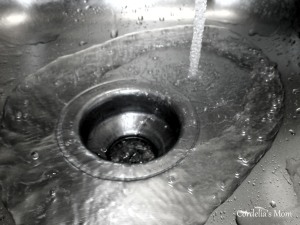
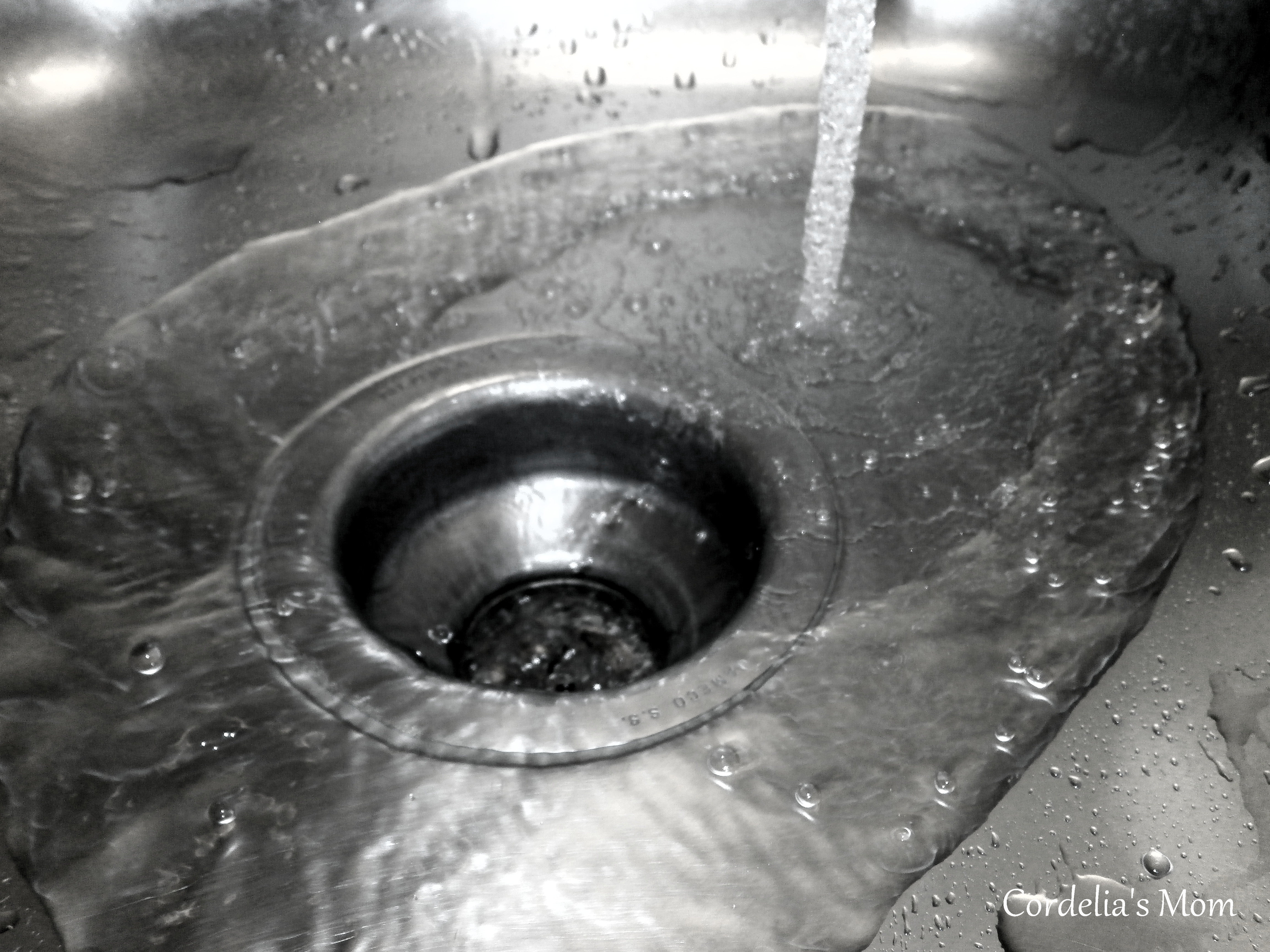
We cleaned out one of the drains in the lab sink at one station and made sure it was perfectly dry. Then we dropped a small piece of sodium down the drain and waited for the class to arrive. The pair of students at that work station was male and very chatty. They weren’t paying much attention until one of them turned on the tap. Bwahaha!
As soon as the water hit the sodium, a “POP!” resounded and a tongue of flame about three inches high erupted from the drain. They froze in panic with their mouths open and then one reached over and opened the tap wider, trying to put out the flame. The more water that went down the drain the bigger the flame grew. It reached about 12 inches high when the sodium ran out and, with a “Poof!” the flame disappeared. The students ran over to the monitor and they were babbling about flames and the sink.
The monitor came over and checked – turning the water off and on, and of course nothing happened. He was starting to seriously doubt this pair when he spied three of us in the hallway laughing so hard we were almost rolling on the floor. It must have clicked what we had done and he just shook his head and told the boys to pay more attention to what they were doing. Ha!
After four years in Chemistry, I bought my own tractor-trailer and went trucking across the continent. I must say that I missed the daily interactions and the studying. As far as learning was concerned that continued unabated – just in a different forum.
__________
Paul Curran and I love to hear from our readers. You my comment on this post, comment on my Facebook or Twitter pages, or email me at cordeliasmom2012@yahoo.com
__________
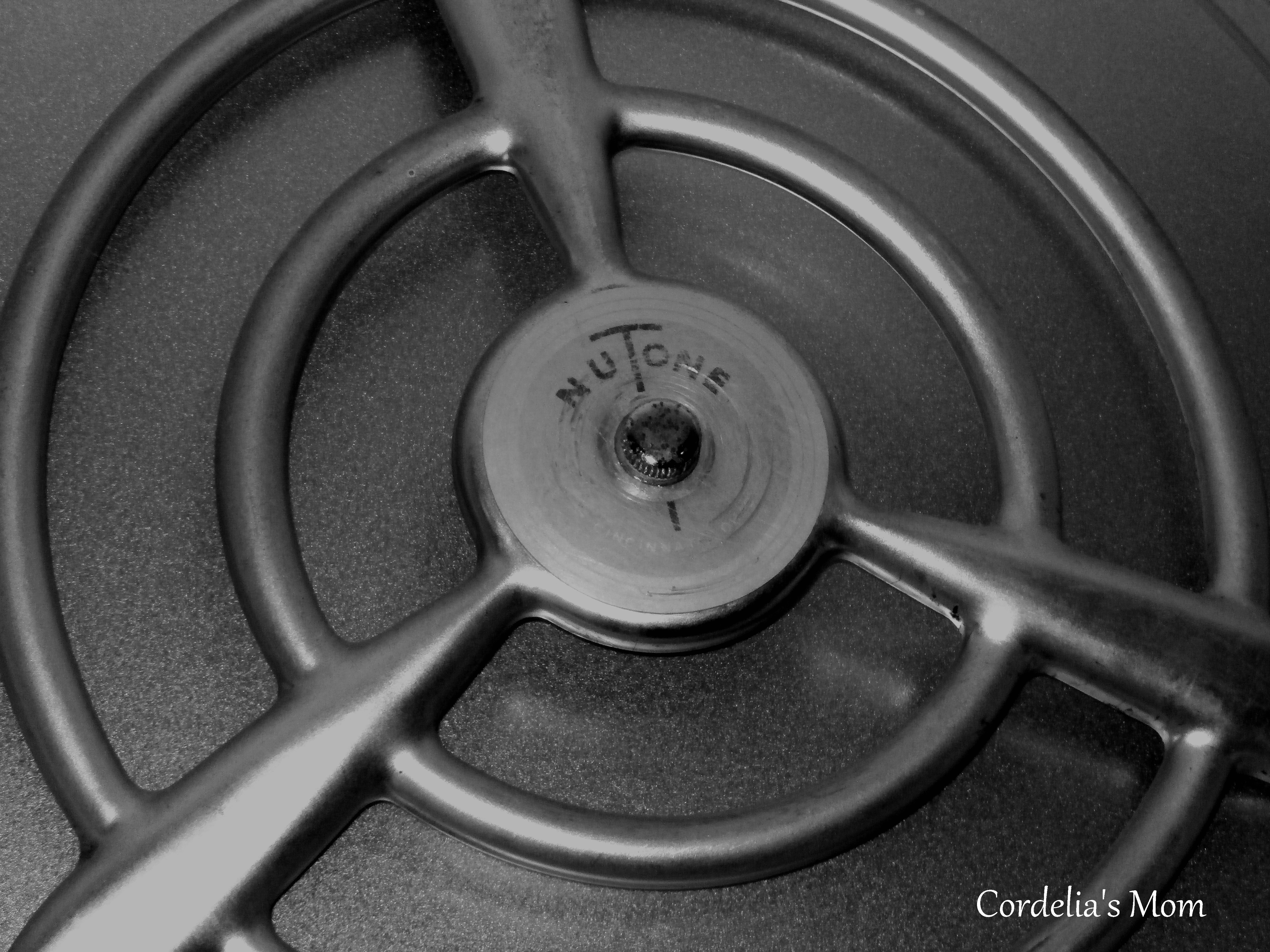
Paul Curran photo by Paul Curran; fan and drain photos by Cordelia’s Mom; credit for other photos is embedded within the photo itself.

 I have a number of reasons to be grateful for my readers.
 And third – yet another award nomination from a fellow blogger! Actually, two nominations, both from Stephanie at Making Time For Me. I am honored to accept the nomination for the Black Cat Blue Sea Award and to participate in the Four Fact Survey Fun Tag.







 Cordelia's Mom, Still